

Apr 15,2026
Spring Into Connection: Why Social Engagement Matters More Than Ever – Part 2
It’s something we hear often:
“They’re not alone-they’re around people all day.”
But here’s the important question:
👉 Are they truly engaged… or simply present?
Because there is a meaningful difference and that difference can shape a person’s emotional well-being, cognitive health, and overall quality of life.
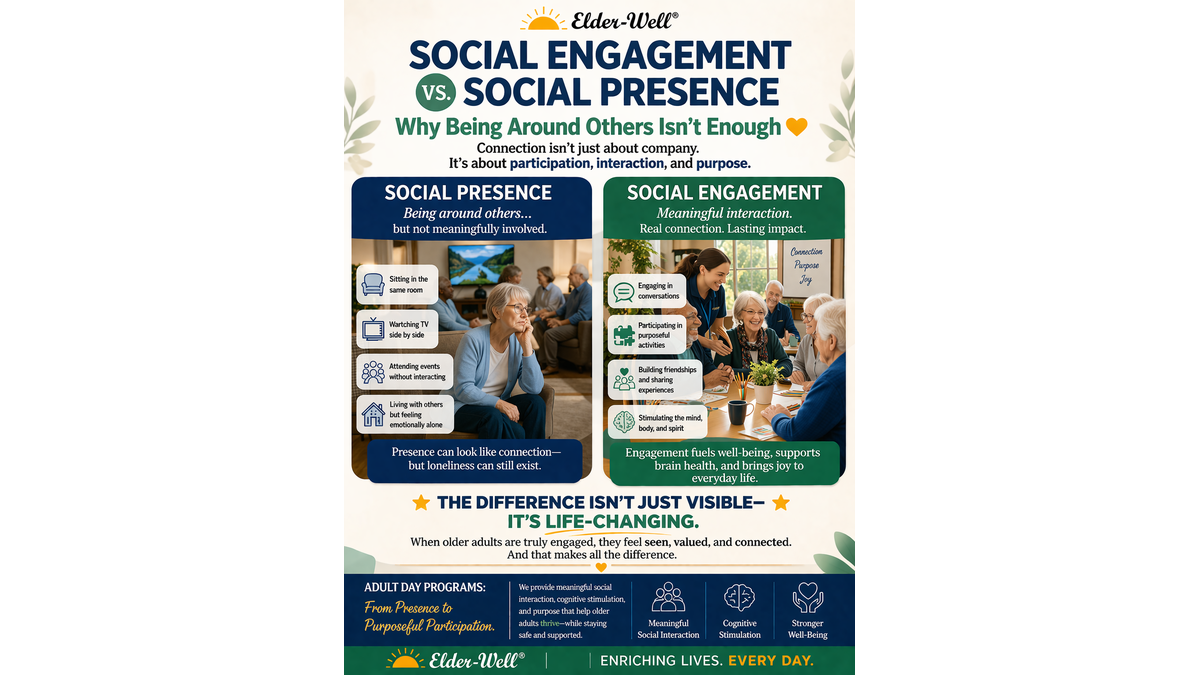
Social presence means being physically near others.
It might look like:
From the outside, it can appear that someone is “social.”
But presence alone doesn’t always create connection.
Social engagement goes deeper.
It involves:
It’s the difference between being in the room… and being part of what’s happening in the room.
For many older adults, especially those experiencing cognitive or physical changes, this distinction becomes even more important.
Someone can be surrounded by people and still feel:
Over time, this can impact:
Research continues to reinforce this reality. Studies supported by the National Institute on Aging have shown that social isolation and lack of meaningful interaction are linked to increased risks of depression and cognitive decline in older adults.
Connection is not created by proximity—it’s created through interaction.
True engagement is not just about passing time.
It supports:
Organizations like the Alzheimer’s Association emphasize that regular social engagement can help support brain health by keeping individuals mentally and socially active.
Even small moments, sharing a story, laughing together, completing a simple activity can have a meaningful impact.
This is where many families find themselves.
A loved one may be:
But their days may lack:
And over time, that lack of engagement can quietly lead to:
Meaningful engagement doesn’t have to be complicated.
It looks like:
Most importantly, it feels:
👉 Inclusive
👉 Supportive
👉 Uplifting
When we begin to look beyond “being around others” and instead focus on how someone is experiencing their day, everything changes.
We move from asking:
To asking:
We believe that connection is not a luxury, it’s an essential part of well-being.
Through structured, person-centered engagement, we create opportunities for individuals to:
Because being present is not the same as being engaged.
And that difference… changes everything.
“They’re Fine at Home”-Are They Really? Understanding Social Needs Beyond Safety
Feel free to contact us with any questions regarding our services or to schedule a visit.