

Apr 22,2026
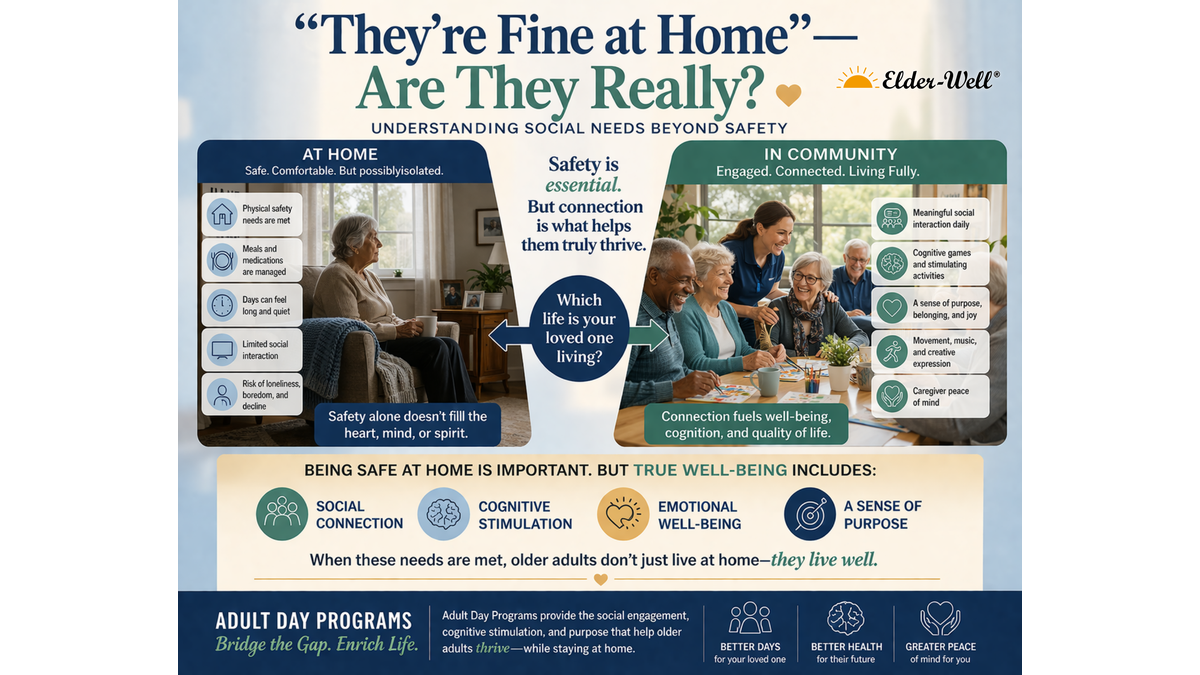
“They’re Fine at Home” … Are They Really?
Understanding Social Needs Beyond Safety
We hear it all the time:
“They’re fine at home.”
And in many ways, that may be true.
They’re safe.
They’re eating.
They’re managing their day-to-day routine.
But here’s the deeper question we don’t always ask:
👉 Are they truly living well-or simply getting by?
Ensuring physical safety is often the first priority when caring for an older adult and rightfully so.
These are all important.
But safety alone doesn’t fill the heart, the mind, or the spirit.
When someone is “fine at home,” it can sometimes mean:
Over time, this can lead to:
👉 These changes are often gradual and easy to miss.
Being at home, even with a caregiver or family nearby does not always mean someone is truly engaged.
There’s a difference between:
True engagement includes:
To truly thrive, older adults need more than safety.
They need:
🤝 Social Connection
Regular interaction that feels meaningful—not just routine.
🧠 Cognitive Stimulation
Activities that challenge the mind and spark curiosity.
💛 Emotional Well-Being
Moments of joy, laughter, and belonging.
🎯 A Sense of Purpose
Feeling needed, included, and part of something.
This is where community-based programs make a profound difference.
In the right environment, individuals experience:
And for families:
When families pause and reflect, one question often shifts perspective:
“Which life is your loved one living?”
Being safe at home is important.
But true well-being goes beyond safety.
It’s about connection.
It’s about engagement.
It’s about living not just existing.
If you’ve ever wondered whether your loved one could benefit from more connection, we invite you to learn more about how community-based programs can help bridge that gap.
Because at the end of the day:
Connection is what helps us truly thrive.
Feel free to contact us with any questions regarding our services or to schedule a visit.